




Marcus was nine when we finally got the autism diagnosis. I say finally because we’d been asking questions since he was four. He was okay at school, then fell apart the second he got in the car. All the signs were there, but three different pediatricians refused to listen. One of them even implied I was the problem. The fourth one referred us out. Our assigned OT actually listened. She didn’t talk down to me, and she didn’t talk down to Marcus. At the end of our first session, she slid a printed sheet across the desk. “Start here,” she said. “Most families try a few of these before they find what works for their kid, but the right one can make a world of difference.” Twelve items, organized by category. Weighted blanket. Compression vest. Body sock. Chew tools. Mini-trampoline. Wobble cushion. Noise-canceling headphones. Fidget set. Vibrating cushion. Brushing protocol kit. Oral motor tools. Therapy putty. I folded the sheet into my bag and felt like I finally had a plan to help my kid. The weighted blanket arrived first. $80. Marcus loved it the first night. Three nights later, it was on the floor. The body sock. $45. He wore it twice, said it itched, done. The mini-trampoline. $199. Two uses, then it lived in the corner collecting laundry. Then came the things I bought in bulk because he lost or destroyed them faster than I could track. Chew necklaces every nine days. Fidget cubes shoved under couch cushions. A wobble cushion. A brushing kit. A compression vest he refused to wear after the second try. I bought so many things. Eight months in, I added it up on the back of an envelope. $1,847. I tried to think of a single thing that actually made his life better. I couldn’t. We were no closer to a calmer house and a happier child than the day we’d walked out of the developmental specialist’s office. School mornings still took 75 minutes of negotiation. Haircuts still ended with Marcus crying in the car. We were still leaving family events early and eating our meals as fast as humanly possible before the next kickoff. And it was taking every ounce of my energy just to hold everything together. I was the weighted blanket. I was the noise-canceling headphones. I was the regulation tool, every day, for every meltdown, every transition, every overstimulated minute in the grocery store. I was so exhausted to my very core, I couldn’t tell where his bad days ended and mine began. That was the night I found Swinlo. I was on the couch scrolling through a Facebook group for parents of autistic kids. Someone had posted a long vent, and the first half was a list of every sensory tool that hadn’t worked for her son. It was almost word-for-word my list. Among the usual sympathy and advice, one comment recommended a product I’d never heard of – the Swinlo sensory swing. And it had its own thread underneath, full of parents with different kids and different needs, all saying the same thing: I opened a tab. $69.99. I almost closed it. I was already almost $2000 into recommended “fixes.” Would this one really be any different?
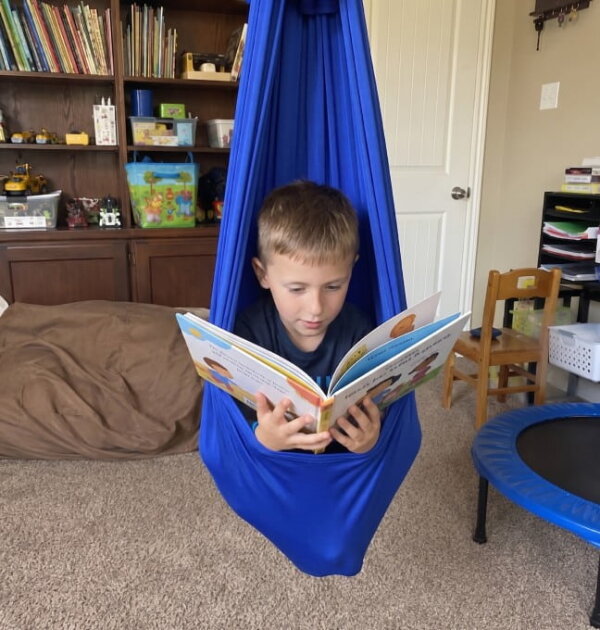
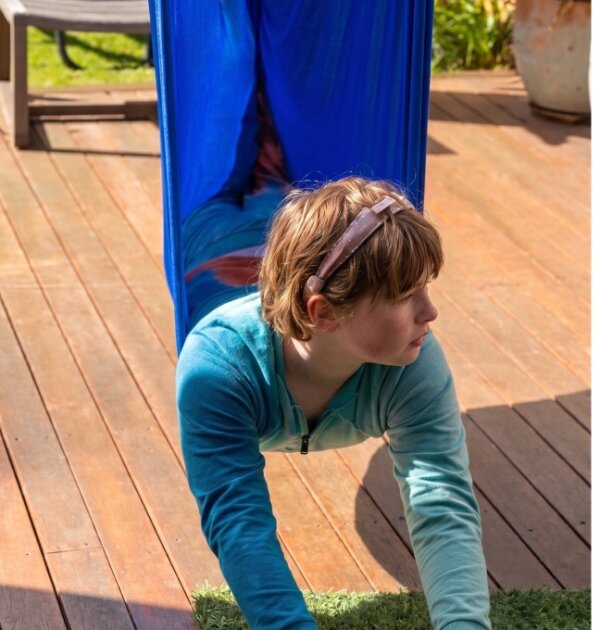
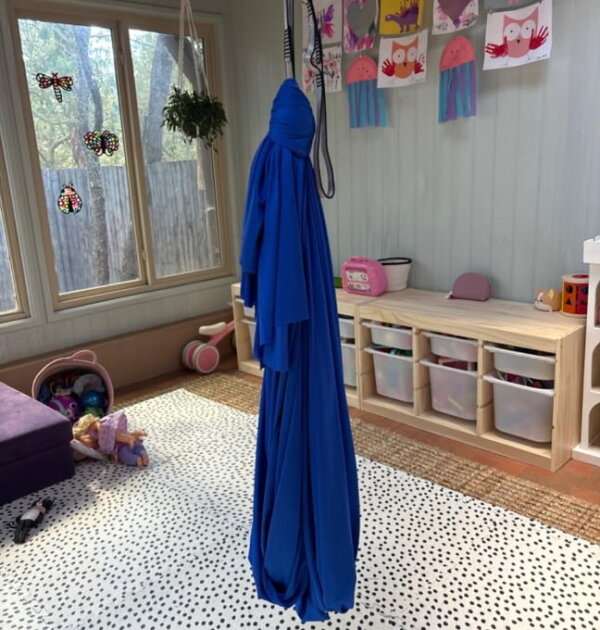
But the listing had a 30-day return window, so I decided to give it a shot. Worst-case, I could get my money back. So I ordered it, praying for a breakthrough, expecting disappointment. The swing arrived four days later. I hung it from a hook in Marcus’s bedroom on a Sunday afternoon. He watched me do it with his arms crossed, which is his default posture for anything new I bring into his room. He didn’t want to try it. I left it hanging and went downstairs. About an hour later, I went up to check on him. I asked him how it felt. He said, without looking at me, “It makes my body feel quieter.” I stood in his doorway longer than I needed to. He didn’t say anything else. He turned a page. Normally, I’d hear him breathing through his mouth, or his foot tapping the bedframe, or the small humming sound he makes when he’s concentrating. There was none of that. I didn’t want to make a thing of it, so I went back downstairs. He didn’t transform overnight. Monday morning was still hard. He still cried about his socks. School drop-off still took a small eternity. Some part of me was already drafting the return email in my head. The swing had been a good moment, but I’d had good moments before with the blanket, with the trampoline, and they weren’t enough. Then on Tuesday, when he came home from school, he walked past me, past his snack, straight to his room. I followed him up after a few minutes. He usually needs to release the day at me for half an hour before he can do anything else. He was inside the Sensory Swing, eyes closed. He stayed there for forty minutes. When he came down for dinner, he told me a long, animated story about a boy in his class who knew all the Greek gods. Marcus has been obsessed with mythology since he was six. Once he gets going on it, he forgets to be guarded. He almost never volunteers that kind of thing. The next morning, before school, he asked if he could have ten minutes in the swing before he got dressed. It was the first time he had ever asked for a regulation tool before the dysregulation. The first two weeks with Swinlo were a window. The next three months were the proof. None of the items from the OT’s original list made it past week two. The swing is still used every day. Here’s what’s different: School mornings stopped being a 75-minute war. Most days now it’s closer to forty, and the first ten of those are him in the swing before he’ll put socks on. He asks for it by name. Marcus has never asked for a sensory tool in his life. He’s asked for the swing every day for three months. Haircuts don’t end in the car anymore. Twenty minutes in the swing before the appointment. October was our first dry-eyed cut in three years. We made it to pie at Thanksgiving. Family events used to end at the one-hour mark. He found a quiet bedroom around hour two, came back out after thirty minutes, and sat at the table. Bedtime is ten minutes instead of forty. The stalling, the water requests, the sudden urgent grievances about his sister are gone. He takes a bath, he sits in the swing, and he’s asleep by 9. I want to be clear that the swing didn’t magically fix everything. He had a meltdown at Target two weeks ago, and we left a full cart in aisle seven. Some mornings are still hard. But the daily baseline is different. That’s the part I didn’t think we’d get back. The same Facebook group is full of parents now passing the recommendation along. I’ve watched the cycle repeat a dozen times. A vent post about failed sensory tools, then a chorus of replies pointing at the same swing. I did the math one more time after Marcus’s three-month OT follow-up. The list cost me $1,847 over eight months. The swing cost just $69.99. The cheapest item I ever bought for my son’s sensory needs is the only one he still uses. And it wasn’t even on the list. If you’ve tried everything on your own list and you’re still where I was, try this one. Click this link to check if Swinlo Sensory Swing is still available As of June 5, 2026* – Swinlo has generated a lot of buzz online, and it’s selling out quickly. Due to its popularity and positive reviews, the company is now offering a one-time 65% discounts to first‑time‑buyers. NOTE: This product is NOT available on Amazon or eBay.$1,847 Later, We Were Right Back Where We Started

A Facebook Vent Post at 11 PM That Finally Steered Me In The Right Direction
The First Time He Climbed In, My Kid Went Quiet
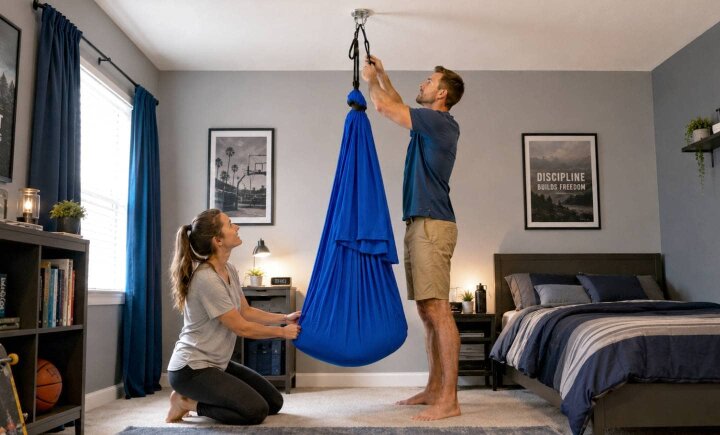
He was inside it. Fully zipped into the cocoon of fabric, holding his book against his chest. He didn’t look up when I came in.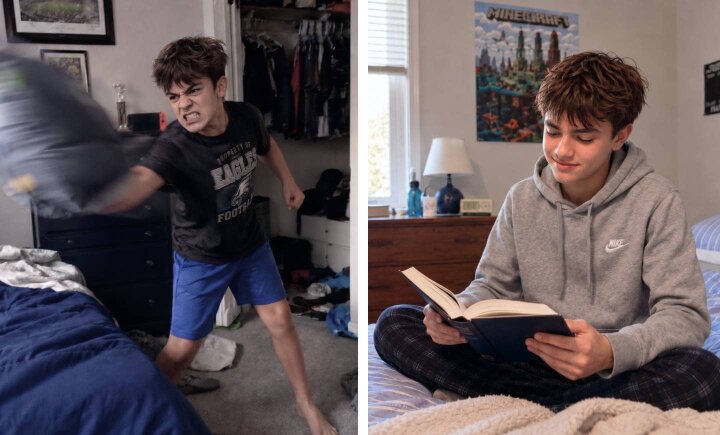
What Our Daily Life Looks Like Three Months In
I’m Not the Only Parent Who Found Swinlo Through a Forum
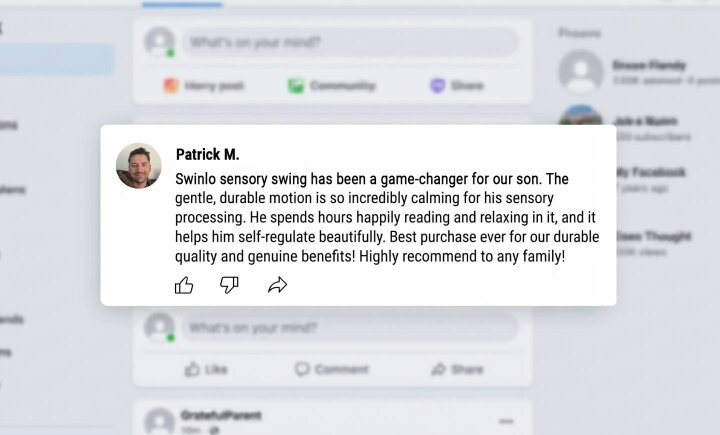
These are just a few I screenshotted along the way:The Cheapest Thing I Bought Is the Only One That Stuck
It’s the only thing I’ve recommended to another parent. It almost feels like my responsibility to pass the torch to the next one, to help someone else.




 Like
Like Comment





Customer Ratings
Average based on 9.803 reviews
 Excellent


